Most organizations spend more time studying turnover after it happens than preventing it before it does. Exit surveys, farewell lunches, and replacement searches have become routine, even in workplaces that genuinely care about their people. The problem is not usually a mystery. Employees who leave can often tell you, in plain terms, why they left. The harder question is why nobody asked sooner.
Gallup's workplace research has tracked employee engagement data across industries for decades. The findings are consistent: roughly 70 percent of employees are not engaged at work on any given day. About half of those who eventually leave say they saw the departure coming for at least a year before they walked out. What changed their minds was rarely a competitor's offer. It was what they were experiencing inside their current organization.
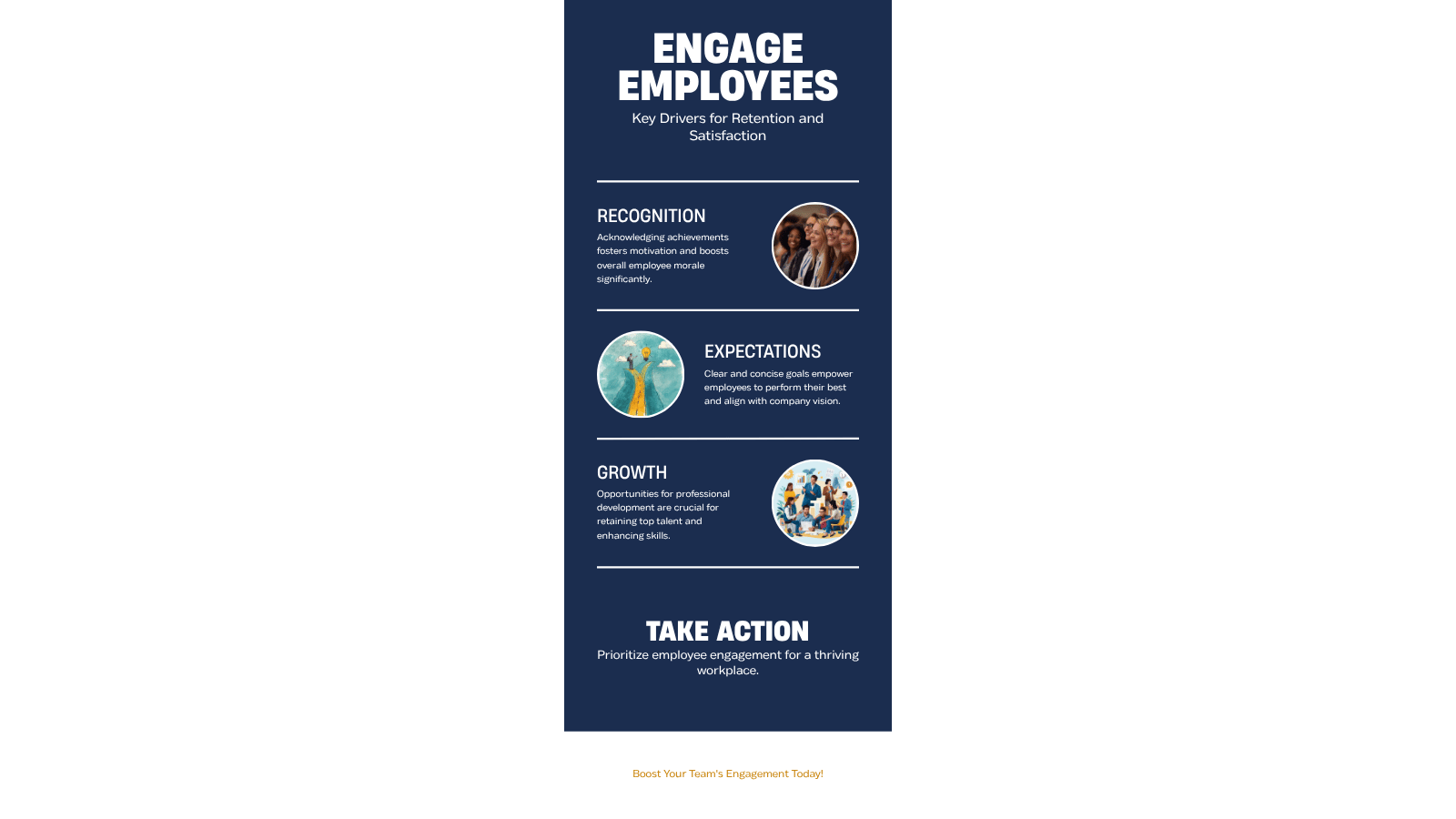
What engagement actually looks like
Engagement is not the same as happiness. A satisfied employee might show up, do the minimum, and go home without complaint for years. An engaged employee does something different: they bring discretionary effort. They think about work problems when they are not on the clock. They notice what could be improved and say so.
The gap between satisfied and engaged comes down to a few consistent factors. Whether employees believe their work matters. Whether they feel their manager actually knows them as a person. Whether they see a realistic path for development in their current role. None of these requires a large budget. They require consistent attention from the people who manage them day-to-day.
That last point often gets misread. Development does not always mean promotion. For many employees, it means learning something new, taking on a project with real responsibility, or getting honest feedback from a manager who is paying attention. A team that never discusses growth is sending a message, whether it intends to or not: there is no future here worth staying for.
What supervisors control more than they realize
The most repeated finding in retention research is also the most uncomfortable one: employees leave managers before they leave companies. That observation gets recycled enough to start sounding like a cliche, but the mechanism behind it matters.
First-line supervisors shape the daily experience of their teams more directly than any HR program, benefits package, or message from senior leadership. A team where the supervisor communicates expectations clearly, notices when someone is struggling, and acknowledges good work will score better on engagement year after year, regardless of what the rest of the organization is doing.
The behaviors themselves are not complicated. They are just inconsistently practiced. Meeting one-on-one with each team member at least twice a month. Asking what is getting in the way, not just what is getting done. Following through when someone raises a concern. Connecting individual tasks to broader goals so the work feels less arbitrary. These are not special techniques. They are habits that most supervisors understand in theory but let slide when workloads increase.
Recognition deserves its own mention. Research from Workhuman in 2024 found that employees recognized at least monthly are three times more likely to report high engagement than those recognized rarely or never. The recognition does not need to be formal. Public acknowledgment in a team meeting, a direct message saying the work was handled well, or a note during a performance conversation all count. What matters is that it is specific and happens regularly, not once a year during a review cycle.
The supervisors who get this right are not necessarily the most charismatic or technically skilled. They are the ones who treat consistency as a professional obligation. Ongoing attention to how each person is doing, what they need, and where they want to go makes the difference between a team with low turnover and one that is perpetually short-staffed and in a rebuilding phase.
LearTree Training works with supervisors and managers across industries to build the habits that make these practices stick. Programs covering employee engagement, supervision basics, and workforce development are available for organizations that want to address retention at the team level, where it actually starts.
See how LearTree's employee engagement programs can work for your team.